

Estonian Art from Beginning to …
Curators: Tamara Luuk and Siim Preiman
The rebirth of Tallinn Art Hall is not without precedent. Including its original inauguration, this marks the fourth return of the space. Each time, the Art Hall has opened into a different era: the Age of Silence, the newly established Estonian SSR, a country that had just regained its independence… Into what kind of era does the Art Hall reopen today?
The canonical understanding of time – where events and movements align neatly along a straight line from past to future – has fallen out of favour. It has given way to an amorphous simultaneity – without a single truth or central protagonist, but instead an endless plurality of perspectives and their bearers. An exhibition hall, moreover, is inherently a contradictory space: while institutions seek to structure and order life, art often has opposing aims.
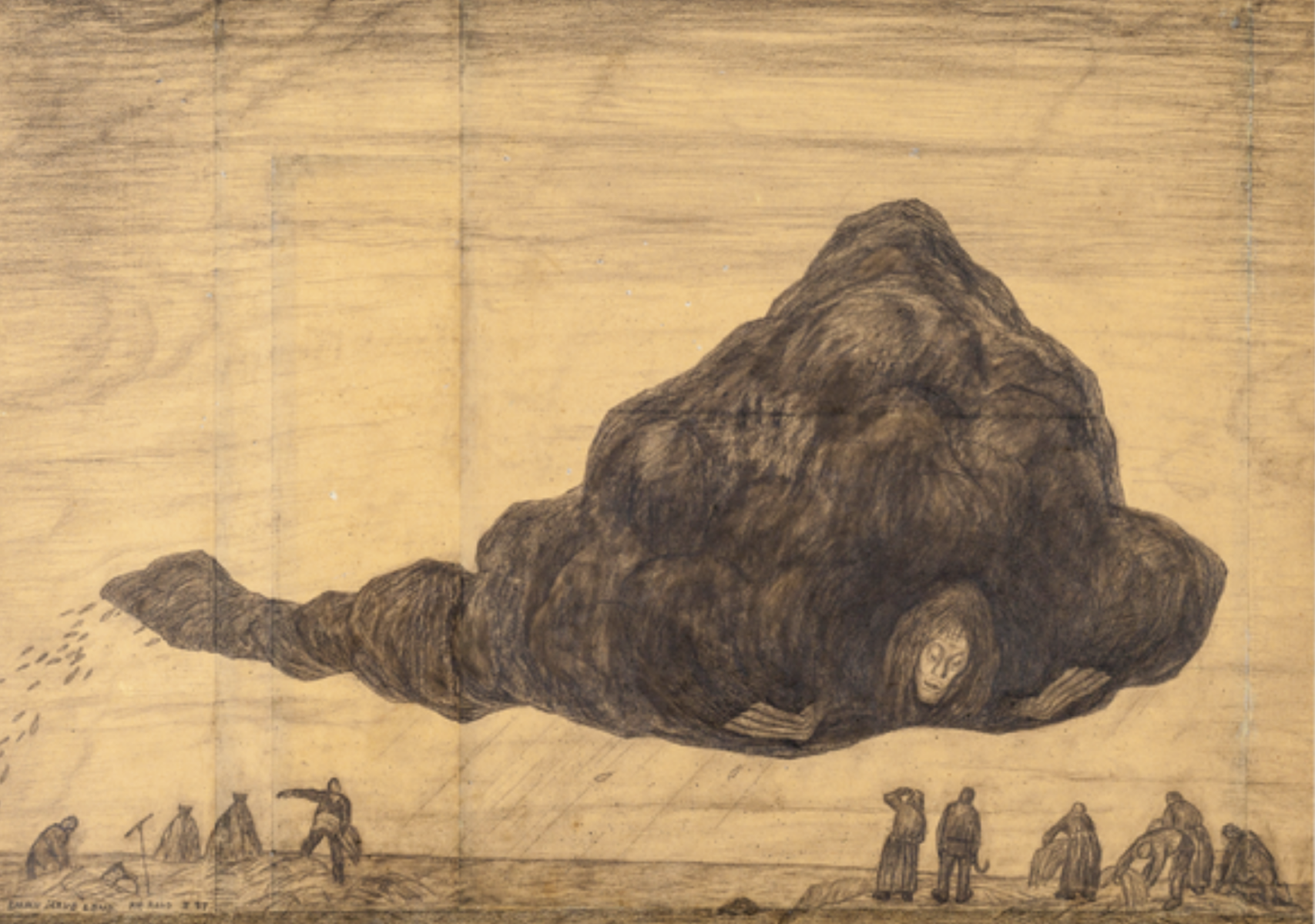
Looking back, our time may one day seem crystal clear – as though it had been a distinct era with its own unmistakable tendencies. Yet from within the present, such clarity eludes us. The two of us are attempting to make sense of it all, to find both a timeless common ground and an anchor in the present – here, in this very place: the land of Estonia, together with its nature and its people. And, of course, the legendary Estonian peasant Sitakoti Mats! Mats, who gathered horse manure from the roads and between the furrows of the fields, fertilised his rye with it, and in doing so became prosperous enough to buy his freedom from serfdom. He symbolises the alpha and omega of our lives – and of our culture as well – since, in order to be buried in the churchyard alongside the Baltic German gentry, Mats donated a chandelier to the church.
Our main focus is the local landscape – its unfolding and murmuring through time, seen through the artist’s eye and the prism of thought, whether romantic, realist, modern, or contemporary. Its presence becomes increasingly mediated, more inclined to retreat into fantasy, more ephemeral, and further removed from lived reality. But somewhere at the back of our minds, we sense that nature – our nature – will endure, even if we may not. We defend it fervently, in the hope that by doing so we might also resolve our own insecurity and fears. That seems to be the current condition, at least in culture – but culture is made largely in the city. When news arrives from the countryside, the sea, or the forest, we have it translated into our own language. Most likely by a machine.